How a Snaggle-Toothed Monster Toy Wiped Out $33 Billion in Market Value
A toy company that sells blind boxes — little packages whose contents remain secret until you open them — became one of the most talked-about stocks in the world in 2025. Pop Mart International, the Beijing-based maker of collectible designer toys, rode a global craze for its Labubu dolls to a valuation that briefly exceeded the combined worth of Hasbro, Mattel, and Sanrio. By June 2025, Pop Mart was worth $44.43 billion. Then reality hit, and it hit hard.
From 300% Rally to a 60% Collapse
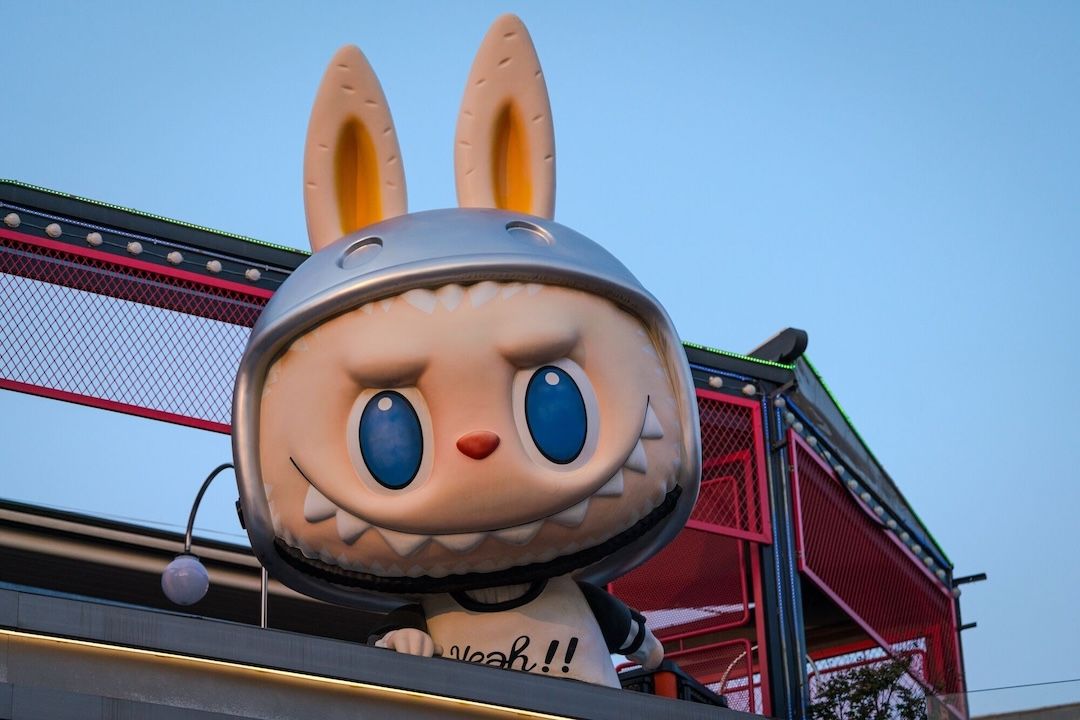
Pop Mart's shares surged roughly 300% from early 2025 to their all-time high in August, driven by global demand for Labubu — an elf-like creature with wide eyes, uneven teeth, and shaggy fur, originally designed by Hong Kong-Dutch artist Kasing Lung. Fights broke out in stores. Secondary market prices for rare editions soared. When the company launched Labubu 3.0, it added $1.6 billion to founder and CEO Wang Ning's net worth in a single day.
Then the mood shifted. By the time Pop Mart announced full year 2025 results on 25th March 2026, the stock had fallen far from its highs and earnings would only deepen the concern among investors. The 2025 annual revenue was a remarkable 37.12 billion RMB (an increase of 185% over 2024) and net profit had more than quadrupled to 12.8 billion RMB. These figures on the surface were fantastic; it's buried in the breakdown that the real problem becomes apparent: the Monsters series of characters, of which Labubu is the key face, constituted 38% of revenue in 2025, a significant rise from 23% in 2024. This meant the company was become increasingly reliant on a single character just when the viability of that character was starting to come into question.
The Market's Verdict Was Swift and Brutal
Shares fell more than 22% on the day results were released. Over the five trading sessions through April 1, 2026, the stock plunged over 30%. From its August 2025 peak, the cumulative decline reached nearly 60%, erasing approximately $33 billion in market capitalisation. Deutsche Bank analyst Sammi Xu downgraded the stock to sell, warning that "the market has not fully factored in a long downcycle scenario with a much lower margin." Inventory turnover days also jumped 21% year on year to 123 days by end-2025, a sign products are moving more slowly.
The concern is not that Labubu has disappeared but that no other character has emerged to take the baton. Skullpanda generated 3.54 billion yuan in 2025, up 170.6%, while Crybaby reached 2.93 billion yuan, up 151.4%. Those are decent numbers, but they remain a fraction of Labubu's 14.16 billion yuan contribution, which surged 365.7%. HSBC trimmed its Pop Mart revenue growth forecast for 2026 from around 30% to under 24%, and flagged an expected 11% to 13% cut in earnings estimates for 2026 and 2027.
Can Pop Mart Survive Life After Labubu?
Management is not standing still. Wang Ning announced a tie up with Sony Pictures to produce a live-action animated film about the Monsters franchise, directed by Paul King (filmmaker of Paddington series). The tie up with Sanrio has launched since March 2026. Phase 1.5 of Pop Mart City Park is scheduled to open during the summer of 2026. The company expects to release small home appliance merchandise under its IPs in April. Pop Mart opened new partner factories in Indonesia, Cambodia and Mexico in Jan 2026 and the markets now constitute 44% of Pop Mart's total revenues.
Whether these moves can fill the hole left by a fading Labubu remains the key question. Morgan Stanley maintains an overweight rating with a price target of HK$325, modeling 13% Labubu sales growth in 2026. But the market has heard the bullish case before. For now, the snaggle-toothed monster that made Pop Mart a phenomenon is also the source of its deepest vulnerability.