Is the Dollar's Dominance Facing Its Greatest Test?
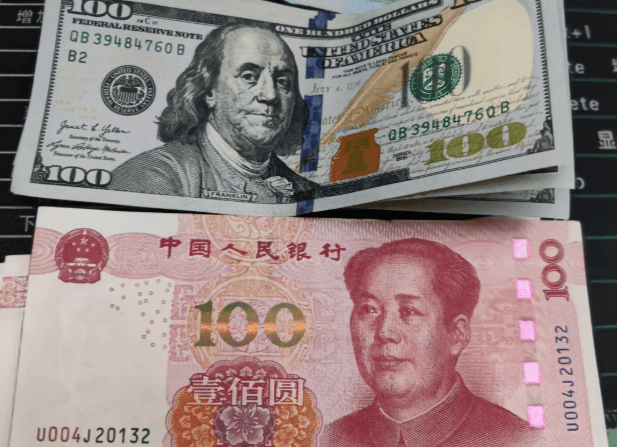
In a recent high-profile interview, Harvard professor and former IMF chief economist Kenneth Rogoff made a bold forecast: the Chinese renminbi is poised to become a global reserve currency within the next five years. This prediction, coming from a leading scholar on the rise and fall of monetary hegemonies, signals a potential seismic shift in the global financial order. Rogoff argues that once China fully commits to this path, global capital will respond with overwhelming enthusiasm. But what drives this confidence, and what must the renminbi achieve to turn this vision into reality?
A Grounded Prediction
Why does an academic's view carry such weight? Rogoff's analysis taps into the core trajectory of global finance. China has explicitly charted a strategic course toward building a financially powerful nation, with cultivating a reserve-currency status for the renminbi as a central goal.
Crucially, Rogoff dismantles a common misconception: the idea that full capital account liberalization is a prerequisite. He notes that the US maintained various capital controls from the 1940s to the 1970s while still consolidating the dollar's reserve status. The real imperative, he stresses, is constructing a supportive financial architecture.
The underlying driver is a profound shift in global investor demand. Worldwide, there is a frantic search for asset diversification and reduced exposure to the US dollar. The weaponization of dollar-based finance—exemplified by the freezing of Russian foreign reserves—has shattered the illusion of absolute safety in dollar assets, pushing nations to avoid keeping all their eggs in one basket.
The Renminbi's Edge and Its Remaining Hurdles
Compared to the dollar, the renminbi holds two distinct strategic advantages. First, is its foundation in the world's most robust real economy. The People's Bank of China reports that the renminbi is now the top settlement currency for China's cross-border payments and the world's second-largest trade finance currency.
As the world's largest goods trader and the biggest trade partner for over 120 countries, China provides the renminbi with an unrivalled base of transactional utility. Unlike the increasingly financialized dollar, the renminbi is backed by the globe's most comprehensive industrial ecosystem.
Second is the credibility of China's stability-oriented monetary policy. The US Federal Reserve's cycles of aggressive hiking and cutting, focused solely on domestic indicators, have repeatedly unleashed turmoil across emerging markets. In contrast, China's monetary and exchange rate policies have prioritized steadiness, avoiding the export of financial volatility—a quality of immense value in today's uncertain world.
However, Rogoff identifies two critical hurdles. One is the need for deeper and more complete financial derivative markets. A mature ecosystem of tools like forward contracts and interest rate swaps is essential for global investors to hedge risks efficiently. The other is the development of an independent cross-border payment and clearing system.
The dollar's clearing infrastructure, still largely controlled by the US, forms the bedrock of its financial sanctions power. The euro's limited reach as a "third-country" currency partly stems from its continued reliance on this dollar-centric network.
A Century in the Making?
Rogoff's forecast reflects a growing consensus within global finance. The internationalization of the renminbi has advanced steadily: from petro-yuan settlements to the share of cross-border yuan transactions rising from 16% in 2020 to nearly 30% in 2025, and the expansion of China's Cross-Border Interbank Payment System (CIPS) to 190 countries. Notably, Europe is also accelerating its own journey toward financial strategic autonomy. Though following different paths, both powers share the goal of reducing excessive dollar dependency.
Five years is but a brief moment in history. Yet, the collective momentum driving diversification suggests we are witnessing the unfolding of a once-in-a-century transformation of the global monetary system. The age of unquestioned dollar supremacy may indeed be entering its final chapter.