Top 5 Least Valuable Currencies in the World: A Story of Economic Turmoil
Currencies are a symbol not only of national economic strength but also of global status. As robust as they are ubiquitous -the US dollar and euro- some currencies have buckled under hyperinflation, political instability, or terrible mismanagement. In this article, we examine the five least valuable currencies in the world today and their implications for people’s everyday activities.
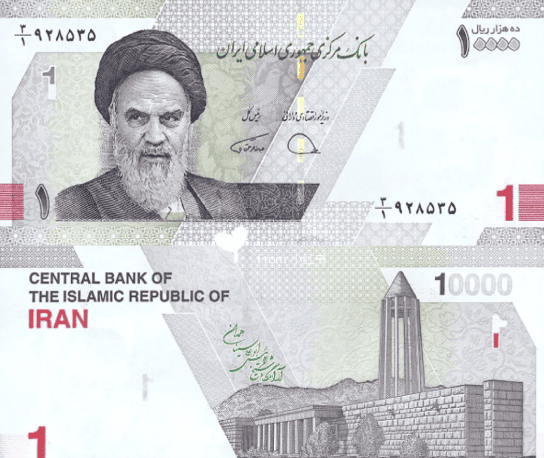
Iranian Rial (IRR): The On-going Loser
The Iranian rial has long been synonymous with devaluation. In 2025, one USD ≈ 420,000 IRR, meaning that it is one of the weakest currencies on earth. Its decline began after the 1979 Islamic Revolution, when US sanctions cut off Iran's oil sales–its chief source of income. Years of sanctions, political ostracism, and bad management have fueled hyperinflation, forcing Iranians to carry huge bundles of money for even the simplest shopping outings. But this problem is not unique to commodities in troubled republics—it has happened all over the world and in all walks of life.
Iran tried to get its economy straightened out in 2020 by introducing the "toman" (1 toman = 10,000 rials), but the move did not halt inflation. Today, a loaf of bread costs over 50,000 rials, and salaries just cannot keep pace with rising prices.
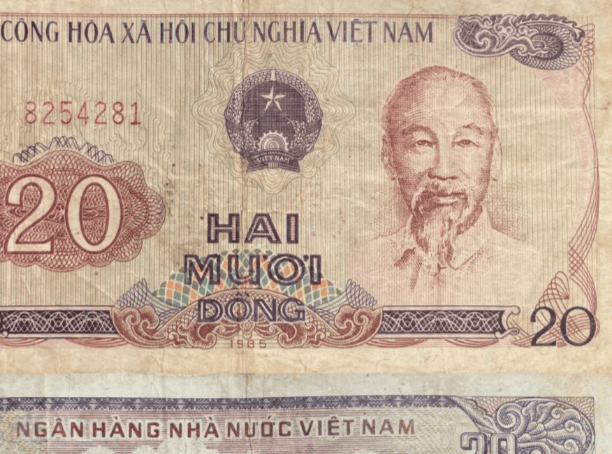
Vietnamese Dong (VND): The Illusion of “Millionaires”
Vietnam's dong is notorious for its wildly inflated denominations. One USD ≈ 25,458 VND, so that even small purchases require millions of dongs. This devaluation of the currency is a residual of Vietnam's post-war economic reform and reliance on the US dollar. Although the dong's value has stabilized in recent years, its purchasing power remains low.
That means for Vietnamese people “thousands” or “millions” as prices are simply second nature. A meal on the street costs 50,000 VND (≈$2), but earnings are low, with the average wage being about 6 million VND ($236) per month. The government has introduced higher-denomination bills (e.g., 500,000 VND notes) in order to reduce the number and difficulty of dealing in cash. However, The idea of the dong as a "soft" currency still prevails.
Indonesian Rupiah (IDR): Asia's Most Volatile Currency
Another currency where instability has taken its toll is the Indonesian Rupiah. You'll get 1 USD ≈ 16,160 IDR, though with a political downturn and deep seated corruption, as well as dependence on raw materials exports, its value has at times been climbing up and down so much it might spin out of control now. The impact of the 1997 Asian Financial Crisis was particularly severe on Indonesia, whose currency fell by 80% within months.
Lebanese Pound (LBP): A Nation in Freefall
These rates given are based on the official rate of exchange for purchases with a US dollar (USD). 1 USD ≈ 89,550 LBP, but on the black market you usually have to add a couple of zeros to buy anything at all! Due to chronic corruption, political deadlock and reliance on imports, years of this slide have brought Lebanon's economy to its knees. In 2024, inflation topped 180%.
For ordinary Lebanese this means skyrocketing prices for everyday necessities like food and fuel. Now a kilogram of bread costs 15,000 LBP (≈$0.17), while the average monthly wage is only 2 million LBP ($22).
Conclusion: Not Just Numbers
Weak currencies can turn daily life upside-down for millions in ways that are hard to imagine. From Iranians carting suitcases full of money to Vietnamese people who deal in millions, these currencies represent the survival stories and account of human battles of ordinary people. Sustained effort, transparency, and political will is what it will take. Reforms and International Development agencies bring hope as brings a home for the poor but confidence in the reconstruction of these economies must also be re-established.