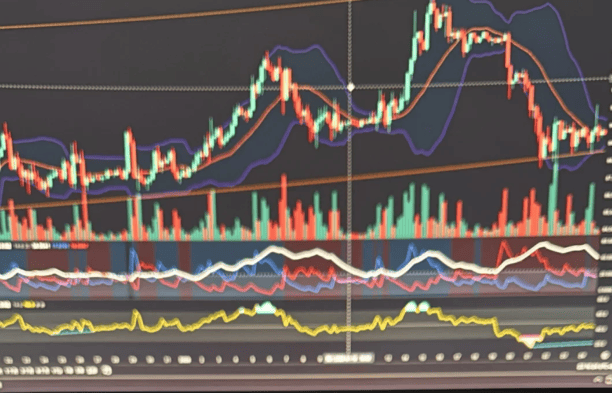
You Can Now Bet Real Money on Almost Anything and Wall Street Is Fine With It
Before betting became a mainstream activity in America, people had to visit authorized U.S. betting locations to place wagers on presidential elections and Federal Reserve interest rate decisions. You can now bet on NHL game scores and Oscar winners and world leader removals after breakfast. The public now participates in prediction markets, which handle vast amounts of money.
From Niche Experiment to $63 Billion Industry
The prediction markets experienced rapid expansion after a particular legal decision that changed everything. The New York-based exchange Kalshi established in 2018 won a legal battle in October 2024 which enabled it to create contracts for American election results. The CFTC prohibited these contracts because it believed they harmed public welfare. The floodgates opened after the CFTC lost its case and stopped its appeal proceedings in May 2025.
The industry began to move forward at an incredible speed after that moment. Kalshi's annualized trading volume grew from roughly $300 million in 2024 to $50 billion in 2025. The company experienced significant growth, increasing its revenue from $24 million to $260 million. Polymarket received a $2 billion investment from the Intercontinental Exchange which owns the New York Stock Exchange while establishing its partnership with Elon Musk for prediction markets on X. The two companies recorded their highest trading activity in March 2026 when they processed a total of $25.7 billion. Research firm NEXT.io reports that prediction markets throughout the world reached a total transaction volume of $63.5 billion in 2025 which represents a 400% increase from the previous year.
The Product Is Simple, the Implications Are Not
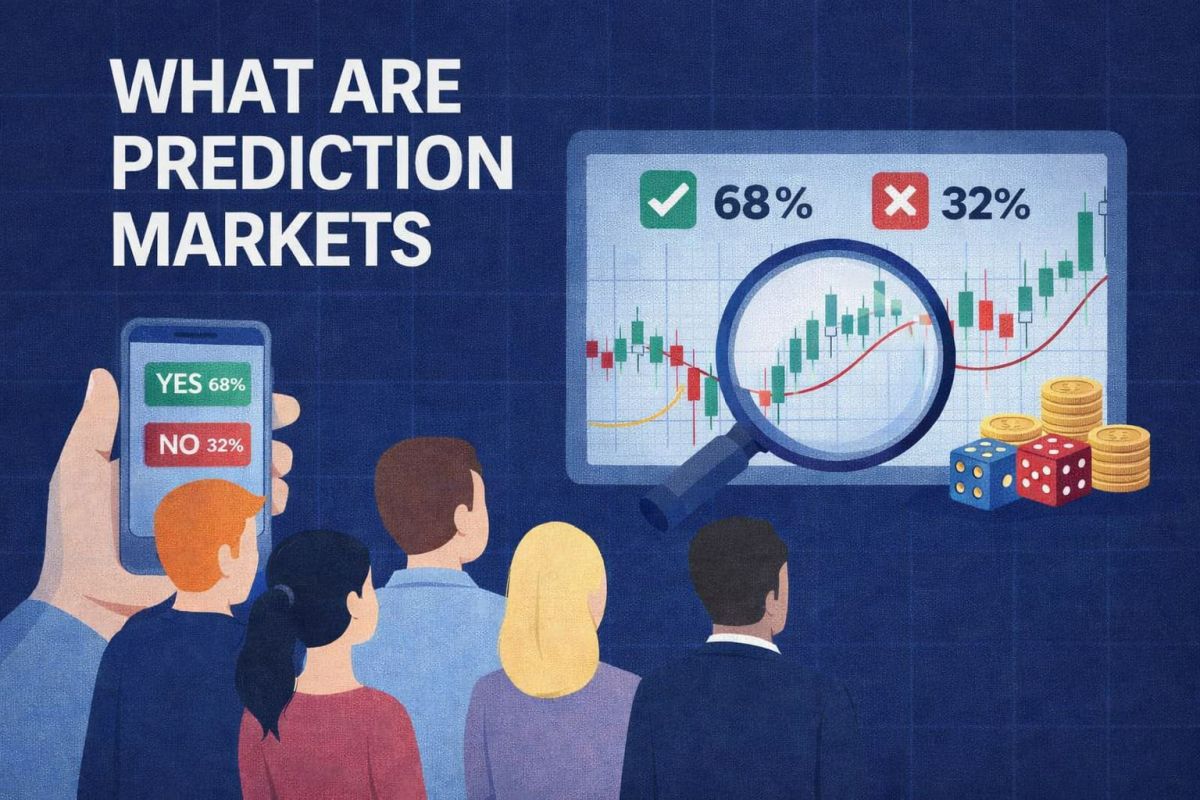
Prediction markets sell binary contracts — yes or no bets on whether something will happen. A Kalshi user who bought a "yes" contract on the 2024 presidential election outcome at $0.55 collected $1 when Trump won. The appeal through its easier-to-understand nature and its interactive nature, and its potential to show more accurate results than existing methods. Polymarket CEO Shayne Coplan told CBS's 60 Minutes that prediction markets are now the most accurate forecasting mechanism humanity has ever developed.
The claim has received growing support from institutions. Bloomberg Terminal introduced Polymarket probabilities to function as market indicators. The event-market data now appears on Google Finance. Kalshi formed data-sharing agreements with CNN and CNBC. The current situation has made it impossible for authorities to establish a boundary between prediction tools and betting activities because they currently lack a system to identify such a boundary.
A Legal Fight That Could Reach the Supreme Court
The platforms depend on an external entity for their operational governance. More than ten bills have been introduced in Congress to restrict prediction markets in 2026. Arizona's Attorney General has filed a 20-count criminal complaint against Kalshi for allegedly operating an unlicensed gambling operation. Massachusetts officials prohibited Kalshi from accepting sports bets from state residents until the company acquired a gaming license.
The courts have shown various attitudes toward this case. The Third Circuit U.S. Court of Appeals made a ruling in April 2026 that classified Kalshi contracts as federal derivatives instead of gambling products and established the CFTC as the exclusive regulatory authority for these contracts. The ruling became an essential industry victory because various circuit courts issued conflicting decisions, which forced the Supreme Court to make a final decision on the topic.
Trading activities have continued without interruption. Volume on the platform increased thirteen times within a single year. Kalshi and Polymarket users continue to bet on outcomes for wars and elections and rate decisions which occur across the globe.