How a $0.125 Grudge Cost Warren Buffett $200 Billion
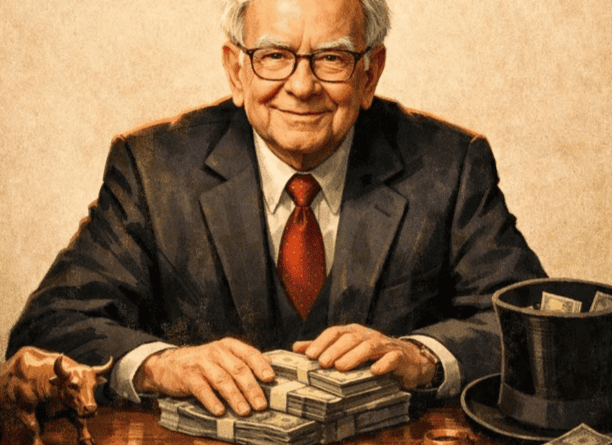
What also comes to mind when you think of Warren Buffett: words like “Oracle of Omaha,” “long-term holding” and “miracle of compounding.” But few know that the world’s most revered investor once made a trade so impetuous and irrational that he still describes it as the dumbest trade of his career. The trigger? A mere $0.125 per share.
The Spark: An Offer, and Then a Handshake Deal
The story begins in 1962. Buffett was 32, running a $7 million hedge fund and rigidly adhering to the value investing approach of his overall mentor, Benjamin Graham: buy cheap unloved companies selling below their net working capital.
That year, he discovered Berkshire Hathaway, a struggling New England textile mill. The business was in terminal decline, closing factories one after another. But it was cheap, and every time it closed a plant, it used the proceeds to buy back its own stock. Buffett saw a simple arbitrage opportunity: buy shares, wait for the next closure and buyback, then sell for a quick profit.
He quietly built a position. By 1964, he held a significant number of shares and travelled to meet Berkshire's CEO, Seabury Stanton. Buffett's goal was simple: negotiate a price for his shares.
After some back-and-forth, Stanton offered $11.50 per share. Buffett agreed, shook hands, and returned to Omaha. Weeks later, the official tender offer letter arrived. The price was $11.375—$0.125 less than promised.
For most people, this would be a minor annoyance. For the young Buffett, it was a personal insult. "I saw red," he later admitted.
Cutting Off His Nose to Spite His Face
Instead of selling, Buffett did the exact opposite. He began buying Berkshire shares aggressively, eventually acquiring enough to take control of the company. His first act as the new owner? Firing Stanton.
It felt like a righteous victory. Decades later, Buffett called it "the dumbest decision I ever made." He had won a petty battle over $0.125 and, in doing so, trapped himself in a dying industry for the next 20 years.
Two Decades of "Filling a Leaky Bucket"
Buffett discovered that controlling a textile mill was very different from trading its stock. The US textile industry was in permanent oversupply. He bought new equipment, automated the workforce, moved factories, and hired the best managers. Nothing worked. Profits evaporated as quickly as they appeared.
But the real damage was the opportunity cost. In 1967, Buffett found a fantastic insurance company he wanted to buy. Instead of forming a new holding company, he used Berkshire Hathaway to make the acquisition. This meant the profitable insurance business was forever saddled with the dead weight of the textile mill.
"I could have been worth $200 billion more today if I had simply started with the insurance company and never touched the textile business," Buffett later estimated.
Three Lessons From a $200 Billion Mistake
1. Don't Buy Cheap Junk
Graham taught Buffett to buy cheap assets. Buffett learned the hard way that it's far better to buy a wonderful business at a fair price than a fair business at a wonderful price. A rotten apple is still rotten, no matter the discount.
2. Cut Your Losses Quickly
It took Buffett 20 years to admit his mistake. "When you find yourself in a hole, the first thing to do is stop digging." Bad investments rarely turn good with more time and effort. They just get deeper.
3. Pick the Right Pond
Buffett learned that even the best manager cannot save a terrible business. The market does not award "degree of difficulty" points. As he famously put it: "It's far better to buy a wonderful company at a fair price than a fair company at a wonderful price." Or, in his sports analogy: Why try to jump over a 7-foot hurdle when there are perfectly good 1-foot bars all around you?
Conclusion
The story of Buffett and Berkshire Hathaway's textile mill is a powerful reminder that even the greatest investors are human. The lesson for the rest of us? Don't fall in love with a bad investment, don't let ego drive your decisions, and always, always choose the right race track before you start running.